
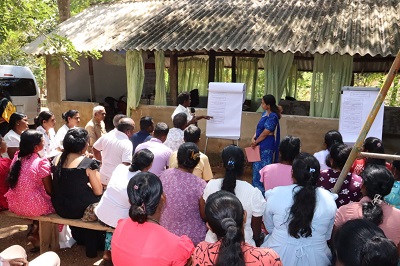
The Community Capacity Building and Community-Based Disaster Risk Management (CBDRM) Plan Validation Workshops were successfully conducted on 12th and 13th March 2026 in the Madawachchiya Divisional Secretariat Division of Anuradhapura District, marking a key milestone in strengthening community resilience. The workshops were held at Padiggama Community Hall (Praja Shalawa) on 12th March and Walagamba Aranya Senasanaya, Thulawelliya on 13th March. These sessions were implemented under the Sri Lanka Preparedness Partnership (SLPP), with support from the Asian Disaster Readiness Fund (ADRF), as part of ongoing efforts to enhance disaster resilience through Community-Based Disaster Risk Management (CBDRM) approaches. The ADRF initiative, supported by international development partners and implemented in Sri Lanka through Janathakshan, focuses on strengthening locally led disaster preparedness and early action systems. The workshops focused on validating the Community-Based Disaster Risk Management Plans (CBDMPs) developed through earlier consultative processes. With the active participation of community members and local stakeholders, the sessions ensured that the plans are practical, locally relevant, and ready for implementation. The programme brought together key stakeholders, including the Divisional Secretary of Madawachchiya, officials from the District Disaster Management Coordinating Unit (DDMCU) – Anuradhapura, Grama Niladhari officers, and GN Division-based development officers. Their active engagement significantly strengthened coordination and contributed to the effectiveness of the validation process. In addition to the validation sessions, the workshops included technical awareness and capacity-building components aimed at strengthening community resilience. Key sessions covered: These sessions were delivered with technical support from the Department of Agrarian Development, the Department of National Community Water Supply (DNCWS), and the DDMCU – Anuradhapura, equipping participants with essential knowledge to better prepare for and respond to disaster risks. The workshops also provided an opportunity for participants to visit field locations and review the current status of proposed interventions under the Madawachchiya DSD projects, further strengthening practical understanding and local ownership. The successful implementation of these workshops was made possible through the strong support and coordination of the Divisional Secretariat – Madawachchiya, DDMCU Anuradhapura, and local partners, including the Anuradhapura Citizen Council (ACC). This initiative reflects the continued commitment of SLPP and its partners to empower communities through locally led disaster risk reduction approaches, contributing towards building safer, more prepared, and resilient communities in disaster-prone regions.
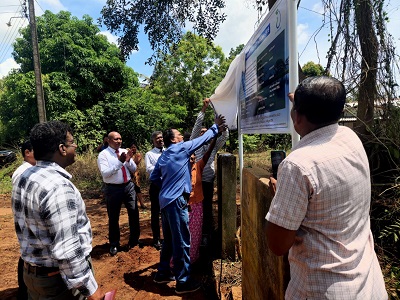
Inauguration of Lower Kongasdigiliya Tank Renovation in Nochchiyagama
The inauguration ceremony for the renovation of the Lower Kongasdigiliya Tank in the Ambagahawewa Grama Niladhari Division of Nochiyagama was successfully held on 29 April 2026, marking an important step toward strengthening water resource management and agricultural livelihoods in the area. The event was graced by the Hon. Member of Parliament, Prof. Sena Nanayakkara, along with the participation of key government officials, including the Deputy Divisional Secretary, Grama Niladhari, Development Officers, and officers from the Divisional Agrarian Department, representing the Anuradhapura District. This initiative is implemented under the project “Water, Sustainable Farming & Livelihoods: Strengthening Sri Lankan Farming Families’ Climate Resilience,” implemented by Janathakshan and funded by the Paul Lieberman Family Foundation through Green Empowerment. The renovation of the tank is expected to directly benefit 56 farming families, supporting irrigation for approximately 70 acres of agricultural land. This intervention plays a vital role in improving water availability, enhancing agricultural productivity, and strengthening climate resilience among rural farming communities. Representing Janathakshan, Dr. Janaka Hemathilaka, Chief Executive Officer/Executive Director; Senior Project Manager Mr. Kumara Rathnayaka, and the project team participated in the event, reaffirming the organization’s commitment to sustainable development and community resilience. The rehabilitation of the Lower Kongasdigiliya Tank highlights the importance of restoring rural water infrastructure to support livelihoods, ensure food security, and promote sustainable resource management. Through collaborative efforts between government institutions and development partners, such initiatives contribute to building resilient communities in climate-vulnerable regions.
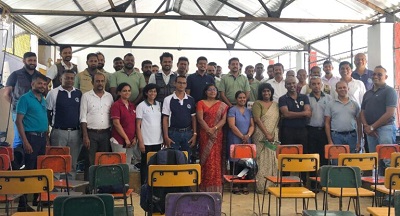
Tea, Rubber & Cinnamon Mobile Land Clinic Conducted in Kegalle District under GEF-7 Project
A Mobile Land Clinic on Tea, Rubber, and Cinnamon was successfully conducted on 02nd and 03rd April 2026 at the Vincit Miyanavita, Densworth, and Dewalakanda Estates in the Kegalle District, under the GEF-7 Project – Partnerships and Innovative Financing to Mainstream Biodiversity and Sustainable Land Management in Sri Lanka’s Wet Zone. The programme brought together technical expertise from key institutions, including the Tea Research Institute (TRI), Tea Small Holdings Development Authority (TSHDA), Rubber Research Institute (RRI), National Rubber Master Plan Management Unit (NRMC), National Cinnamon Research and Training Centre (NCRTC), and the Rubber Development Department (RDD). The Mobile Land Clinic served as a practical platform for estate communities and smallholders to engage directly with technical officers and experts. During the sessions, participants were able to identify and discuss key challenges related to tea, rubber, and cinnamon cultivation. Expert guidance was provided on a range of critical areas, including soil conservation practices, fertilizer application, soil testing methods, soil quality improvement, pest and disease management, and other essential technical interventions required to enhance productivity and sustainability. The programme emphasized the importance of sustainable land management (SLM) and biodiversity conservation practices within plantation landscapes, aligning with the broader objectives of the GEF-7 project to promote environmentally sustainable and climate-resilient agricultural systems. The sessions were conducted with active participation, knowledge exchange, and practical engagement, enabling participants to gain valuable insights and technical solutions tailored to their local contexts. This initiative highlights the importance of multi-stakeholder collaboration in strengthening the plantation sector while ensuring long-term environmental sustainability and improved livelihoods for communities in the wet zone.
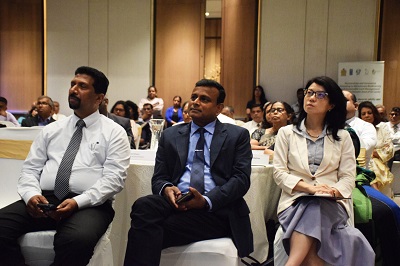
Plantation Sector Forum Held in Colombo under the GEF-7 Project
A Plantation Sector Forum under the “Partnerships and InnovativeFinancing to Mainstream Biodiversity and Sustainable LandManagement in Sri Lanka’s Wet Zone (GEF-7 Project)” wassuccessfully held on 04 March 2026 in Colombo, bringing together keystakeholders from across the plantation sector. The forum convened around 100 participants, includingrepresentatives from government agencies related to the plantationsector, plantation companies, development agencies, and academicexperts. The event provided an important platform for dialogue,collaboration, and knowledge sharing among stakeholders workingtowards strengthening sustainability within Sri Lanka’s plantationlandscape. During the forum, participants were introduced to the objectives andstrategic focus of the GEF-7 project, highlighting its importance for theplantation sector in promoting sustainable land management (SLM)and biodiversity conservation. Discussions explored how theseapproaches can be integrated into plantation management practicesto enhance long-term environmental sustainability while supportingsectoral productivity and resilience. A key focus of the project is the promotion of Public-Private-PeoplePartnerships (PPPP) to strengthen collaboration between governmentinstitutions, private plantation companies, local communities, anddevelopment partners. The forum also highlighted the project’semphasis on innovative financing mechanisms, including theexploration of new financial approaches that support biodiversityconservation and sustainable land management within plantationlandscapes. Representatives from government agencies and plantation sectorcompanies actively shared their experiences, ideas, and suggestionsduring the discussions. Participants also reflected on existingchallenges in integrating sustainable practices within plantationsystems and explored potential pathways and collaborative actions toaddress them. The forum concluded with a shared understanding of the importanceof collective action and partnerships in advancing sustainableplantation management, ensuring both environmental conservationand long-term economic sustainability for the sector .
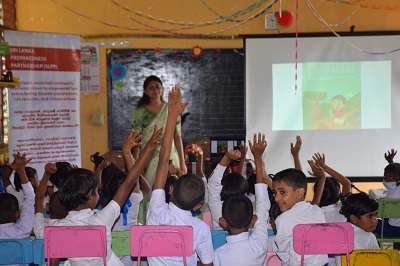
School Awareness Programme on Landslide Risk & Preparedness – Day 03 Conducted in Walasmulla
Under the Asian Disaster Readiness Fund (ADRF) – Pillar I Project, the School Awareness Programme on Landslide Risk and Preparedness was successfully conducted on its third consecutive day, 11 February 2026, in the Walasmulla Divisional Secretariat Division of the Hambantota District. Implemented under Output 1.2: Enhanced community awareness on landslide risk and preparedness, the programme continued as part of a series of school-based awareness sessions aimed at strengthening disaster preparedness among vulnerable communities. The programme was carried out through the Sri Lanka Preparedness Partnership (SLPP), in collaboration with the District Disaster Management Coordinating Unit (DDMCU) – Hambantota and the Human Settlements Planning & Training Division of the National Building Research Organisation (NBRO). Coordination support was provided by the Zonal Education Department of Walasmulla and the Walasmulla Divisional Secretariat. The Day 03 session was conducted at Pathegama Primary School, with activities taking place from 8.30 a.m. to 12.00 noon. The programme commenced with an awareness session for school children, followed by dedicated sessions for teachers and parents, ensuring a comprehensive approach to community preparedness. Sessions were facilitated by officers from the Disaster Management Centre (DMC) and the National Building Research Organisation (NBRO), covering key areas such as: Building on the knowledge shared during the previous sessions, the programme further reinforced understanding among students while actively engaging teachers and parents to support preparedness at household and community levels. With the successful completion of the third consecutive day, the awareness programme has reached multiple schools within identified landslide risk clusters, significantly strengthening knowledge, preparedness, and resilience among students, educators, and communities in the Walasmulla area.
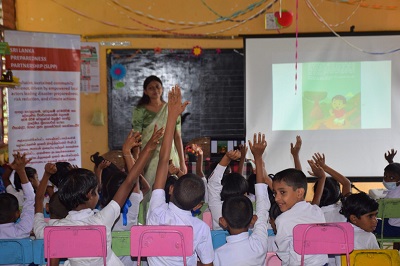
School Awareness Programme on Landslide Risk & Preparedness – Day 02 Conducted in Walasmulla
Under the Asian Disaster Readiness Fund (ADRF) – Pillar I Project, the School Awareness Programme on Landslide Risk and Preparedness continued successfully on its second consecutive day, 10 February 2026, in the Walasmulla Divisional Secretariat Division of the Hambantota District. Implemented under Output 1.2: Enhanced community awareness on landslide risk and preparedness, the programme builds on a series of school-based awareness sessions aimed at strengthening disaster preparedness in landslide-prone communities. The programme was carried out through the Sri Lanka Preparedness Partnership (SLPP), in collaboration with the District Disaster Management Coordinating Unit (DDMCU) – Hambantota and the Human Settlements Planning & Training Division of the National Building Research Organisation (NBRO). Coordination support was provided by the Zonal Education Department of Walasmulla DSD and the Walasmulla Divisional Secretariat. Programme Locations The Day 02 sessions were conducted at: Sessions were held from 8.30 a.m. to 12.00 noon, with parallel implementation in both schools. Two technical teams, together with project staff, facilitated the sessions simultaneously at each location. Enhancing Awareness Across School Communities The programme commenced with interactive sessions for school children, followed by dedicated awareness sessions for teachers and parents, ensuring a comprehensive and inclusive approach to disaster preparedness. Facilitators from the Disaster Management Centre (DMC) and the National Building Research Organisation (NBRO) covered key areas including: Following the student sessions, teachers and parents were engaged to reinforce key messages and share the knowledge gained by students. Special emphasis was placed on recognizing and responding to environmental changes observed by children, encouraging adults not to overlook such observations, as they can serve as important early warning indicators. Strengthening Preparedness and Resilience The Day 02 programme further strengthened awareness and understanding of landslide risks and early warning responses among students, teachers, and parents, contributing to improved preparedness at school, household, and community levels. The continuation of the programme reflects a sustained effort to build resilient communities in landslide-prone areas of Walasmulla, ensuring that both children and adults are equipped with the knowledge and skills to respond effectively to disaster risks.
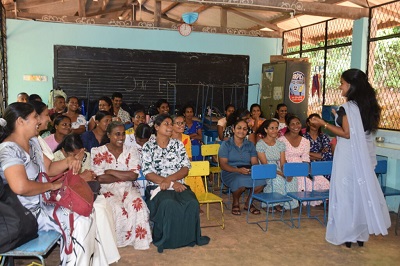
School Awareness Programme on Landslide Risk & Preparedness – Day 01 Conducted in Walasmulla
Under the Asian Disaster Readiness Fund (ADRF) – Pillar I Project, the School Awareness Programme on Landslide Risk and Preparedness was successfully launched on 09 February 2026 in the Walasmulla Divisional Secretariat Division of the Hambantota District. Implemented under Output 1.2: Enhanced community awareness on landslide risk and preparedness, this programme marked the commencement of a series of school-based awareness sessions aimed at strengthening disaster preparedness among vulnerable communities. The programme was carried out through the Sri Lanka Preparedness Partnership (SLPP), with technical support from the District Disaster Management Coordinating Unit (DDMCU) – Hambantota and the Human Settlements Planning & Training Division of the National Building Research Organisation (NBRO). Coordination was provided by the Zonal Education Department of Walasmulla DSD and the Walasmulla Divisional Secretariat. Programme Locations The Day 01 sessions were conducted at: Sessions were held from 8.30 a.m. to 1.30 p.m., with parallel implementation in both schools. Two technical teams, together with project staff, facilitated the sessions simultaneously to ensure effective outreach. Building Awareness Among Students, Teachers, and Parents The programme began with interactive sessions for school children, followed by dedicated awareness sessions for teachers and parents, ensuring a comprehensive and inclusive approach to disaster preparedness. Facilitators from the Disaster Management Centre (DMC) and the National Building Research Organisation (NBRO) covered key topics including: Through interactive discussions and practical demonstrations, students gained valuable knowledge on identifying landslide risks and responding safely during emergencies. Following the student sessions, awareness was extended to teachers and parents, with a strong emphasis on recognizing and responding to early warning signs observed by children. Participants were encouraged not to overlook students’ observations of environmental changes, as these can serve as important indicators of potential landslide risks. Strengthening Community Preparedness This integrated approach strengthened awareness and preparedness at school, household, and community levels, contributing to building a more resilient Walasmulla community. The successful implementation of Day 01 marked an important step in enhancing disaster risk awareness among school communities in landslide-prone areas.
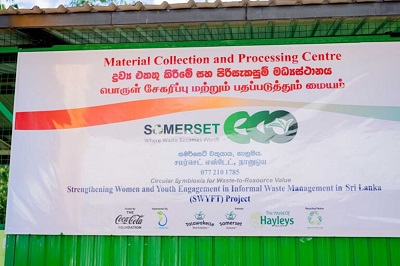
Sri Lanka’s First Hydropower-Driven Zero-Emission Material Collection Centre Established in Thalawakelle under SWYFT Project
Sri Lanka’s first zero-emission Material Collection and Processing Centre (MCPC) powered entirely by hydropower was officially opened at Somerset Estate, Thalawakelle in the Nuwara Eliya District, under the Strengthening Women and Youth Engagement in Informal Waste Management in Sri Lanka (SWYFT) Project. This landmark initiative is funded by The Coca-Cola Foundation (TCCF) and implemented by Janathakshan, with Neptune Recyclers as the recycling partner, in collaboration with Thalawakelle Plantations. The centre was inaugurated in commemoration of World Recycling Day, marking a significant milestone in advancing sustainable waste management solutions within the plantation sector. Operating entirely on 100% hydropower, the facility stands as Sri Lanka’s first hydropower-driven MCPC, demonstrating an innovative and environmentally responsible approach to waste management. Innovative and Sustainable Waste Management Solutions The facility is equipped with baler machines, as well as electric bikes and a specially designed three-wheeler to support efficient material collection and transportation. Notably, both the e-bikes and the three-wheeler are powered and charged using hydropower, ensuring a fully zero-emission operation. The three-wheeler introduced through this initiative is also a first-of-its-kind design specifically developed for material collection, further enhancing efficiency and innovation within the waste management system. This initiative represents the first public–private partnership in waste management within the plantation sector, bringing together key stakeholders to promote circular economy practices and sustainable environmental solutions. Multi-Stakeholder Collaboration The opening ceremony was attended by the Mayor of Nuwara Eliya, the Chairman of the Pradeshiya Sabha, the Chief Executive Officer of Talawakelle Tea Estate, Mr. Roshan Narasinghage (Director of Public Affairs, Communications and Sustainability), and Dr. Janaka Hemathilaka, Chief Executive Officer of Janathakshan. Representatives from Coca-Cola Beverages, Talawakelle Tea Estate, Janathakshan, and Neptune Recyclers, along with members of the local community, were also present at the event. Strengthening Waste Management and Livelihoods Under the SWYFT Project, a total of five Material Collection and Processing Centres (MCPCs) have now been established across the Kandy, Kurunegala, Matale, and Nuwara Eliya Districts. These centres play a vital role in strengthening local waste management systems, enhancing recycling infrastructure, and creating sustainable livelihood opportunities, particularly for women and youth engaged in informal waste collection. The establishment of the hydropower-driven MCPC in Thalawakelle highlights how innovative, inclusive, and environmentally sustainable solutions can transform waste management systems while contributing to climate resilience and community development.
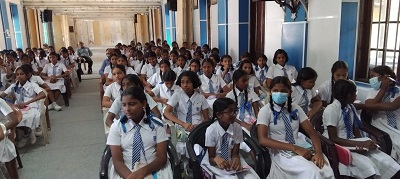
SWYFT Project Conducts School-Based Waste Management Awareness Programme at Holy Family Convent, Kurunegala
Under the Strengthening Women and Youth Engagement in Informal Waste Management in Sri Lanka (SWYFT) project, a school-based awareness programme on responsible waste management was successfully conducted at Holy Family Convent, Kurunegala, with the participation of approximately 200 students. The programme aimed to promote environmentally responsible behaviour among school children and encourage the adoption of sustainable waste management practices from an early age. It forms part of SWYFT’s ongoing efforts to create long-term behavioural change through school-based awareness initiatives. During the session, students were introduced to the fundamentals of responsible waste management, with a strong focus on the 3R principles, Reduce, Reuse, and Recycle. The discussions highlighted the environmental and health impacts of improper waste disposal, particularly the growing issue of plastic pollution and its effects on ecosystems and communities. Special emphasis was placed on waste segregation and recycling practices, helping students understand how simple daily actions, such as separating waste at source, can contribute to effective waste management and support circular economy solutions. Students were encouraged to practice responsible waste management at both school and household levels and to act as change agents within their families and communities. The interactive nature of the programme allowed students to actively participate through discussions, questions, and experience sharing, making the session engaging and impactful. By linking environmental responsibility with everyday actions, the programme reinforced the importance of individual contributions toward protecting the environment. This awareness programme reflects SWYFT’s broader commitment to empowering youth and communities, while strengthening inclusive and sustainable waste management systems across Sri Lanka. Janathakshan will continue to conduct similar initiatives to build a more environmentally conscious and responsible future generation.
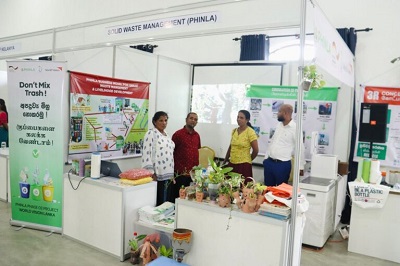
PHINLA II Project Participates in “INOVATECH 26” Exhibition at St. Joseph’s College, Wattala
Participation in “INOVATECH 26” reflects PHINLA II’s continued commitment to engaging with youth, promoting environmental education, and encouraging innovative thinking to build more sustainable and resilient communities. In celebration of the 30th Anniversary of St. Joseph’s College, Wattala, a Science and Technology Exhibition – “INOVATECH 26” was successfully held on 19th and 20th March 2026 at the college premises. The exhibition showcased the innovation and creativity of students across a wide range of fields, including engineering, mathematics, artificial intelligence (AI), agriculture, waste management, mechatronics, food security, and nutrition. The event provided a vibrant platform for young innovators to present their ideas and solutions to real-world challenges. The PHINLA II Project, funded by the German Federal Ministry for Economic Cooperation and Development (BMZ) and World Vision Germany, and implemented by World Vision Lanka in partnership with Janathakshan, participated in the exhibition under the waste management component. At the PHINLA II project stall, visitors were introduced to key project interventions, including the Resource Bank concept, the overall scope of the PHINLA II Project, and practical solutions such as the electric compost bin. The stall also showcased innovative approaches being implemented under the project to promote sustainable waste management and circular economy practices at the community level. The exhibition provided an excellent opportunity to raise awareness among students, teachers, and the wider community on responsible waste management practices and the importance of viewing waste as a resource. Visitors actively engaged with the PHINLA II team, gaining insights into how such interventions can be adopted in schools and communities. In recognition of its support for youth innovation and environmental awareness, the PHINLA II Project contributed as a Silver Sponsor for the exhibition.
