
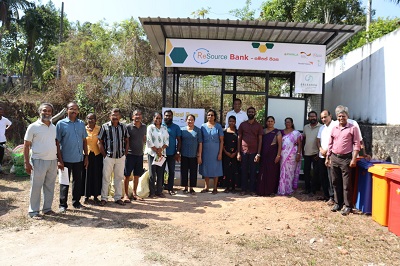
A Resource Bank opening ceremony was successfully held on 20 March 2026 in Niwandama, Ja-Ela, under the PHINLA II Project, marking an important step toward strengthening community-based waste management and circular economy practices. The event was attended by the Chairman of the Ja-Ela Pradeshiya Sabha, members of the Pradeshiya Sabha, representatives from World Vision Lanka, and Janathakshan, along with active participation from community members in the area. The PHINLA II Project is funded by the German Federal Ministry for Economic Cooperation and Development (BMZ) and World Vision Germany, and is implemented by World Vision Lanka in partnership with Janathakshan. Working closely with local authorities and communities, the project promotes sustainable waste management, circular economy practices, and community-driven environmental solutions, ensuring long-term environmental and social impact. The establishment of the Resource Bank aims to promote proper waste segregation, recycling, and responsible waste management practices at the community level. Through this initiative, residents are encouraged to bring recyclable materials, particularly plastic, paper, and other reusable waste, to the Resource Bank, where they can be collected, sorted, and directed into recycling value chains. The Resource Bank concept supports the transition from viewing waste as a problem to recognizing it as a valuable resource, contributing to both environmental conservation and livelihood opportunities. It also plays a key role in strengthening community engagement and ownership in local waste management systems. Under the PHINLA II Project, such initiatives are designed to empower communities, improve local environmental conditions, and support the development of sustainable and inclusive waste management solutions. The collaboration between local authorities, development partners, and communities ensures that these efforts are practical, locally relevant, and sustainable in the long term. The active participation of community members at the opening ceremony reflects growing awareness and commitment toward maintaining cleaner surroundings and adopting responsible waste management practices. Janathakshan, together with its partners, will continue to support and expand similar initiatives to strengthen community-driven waste management systems and circular economy practices across Sri Lanka.

National Preparation Event on Santa Marta Conference – Columbia and Fossil Fuel Treaty – Sri Lanka
Janathakshan, in collaboration with the Fossil Fuel Treaty (FFT) Initiative and Climate Action Network South Asia (CANSA), successfully conducted the National Preparation Event on Santa Marta Conference – Columbia and Fossil Fuel Treaty – Sri Lanka on 13th March 2026 at the Grand Monarch Hotel, Colombo. This high-level, multi-stakeholder dialogue brought together representatives from government institutions, civil society organizations, the private sector, academia, and international partners to collectively explore Sri Lanka’s pathway towards a just, equitable, and sustainable energy transition. A National Dialogue with Global Relevance The event was organized as a key preparatory platform for Sri Lanka’s engagement in the upcoming Santa Marta Conference in Columbia, and contributes to broader global discussions on transitioning away from fossil fuels in alignment with international climate commitments. The discussions emphasized that although Sri Lanka is a low-emitting country, it remains highly vulnerable to climate impacts. The country’s heavy reliance on imported fossil fuels has also exposed it to economic risks, particularly during the 2022 economic crisis, highlighting the urgent need for a transition towards renewable and resilient energy systems. Key Discussions and Insights Participants engaged in in-depth discussions on: The event also highlighted the importance of social justice and inclusivity, ensuring that transition processes do not disproportionately impact vulnerable communities, particularly women and marginalized groups. Strengthening Multi-Stakeholder Collaboration A key outcome of the event was the recognition that achieving a Just Transition requires strong collaboration across sectors. Government leadership, supported by civil society advocacy, private sector engagement, and international cooperation, will be critical in driving this transformation. Participants further emphasized the importance of regional cooperation and global solidarity, positioning Sri Lanka as a proactive contributor to international climate governance. Way Forward The insights and recommendations generated during the event will contribute to: A Step Towards a Sustainable Future The National Preparation Event marked an important milestone in Sri Lanka’s journey towards a fossil-free, resilient, and equitable future. By bringing together diverse voices and expertise, the event has laid a strong foundation for continued dialogue, collaboration, and action.

E-Bikes Distributed to Informal Waste Collectors in Kurunegala, Celebrating International Women’s Day
In celebration of International Women’s Day 2026, electric bikes (e-bikes) were distributed, today (09.03.2026) to informal waste collectors (IWCs) in Kurunegala under the Strengthening Women and Youth Engagement in Informal Waste Management in Sri Lanka (SWYFT) Project, implemented by Janathakshan The event took place at the North Western Province Provincial Council, with the participation of the Chairman of the Kuliyapitiya Pradeshiya Sabha, the Chairman of the Narammala Pradeshiya Sabha, the Provincial Commissioner of Local Government, other government officials, and representatives from Janathakshan. Aligned with the International Women’s Day 2026 theme “Give to Gain,” the initiative highlighted the importance of investing in women and local communities to create broader social and environmental benefits. By providing tools and opportunities that strengthen women’s economic participation, communities can achieve more resilient and sustainable development outcomes. During the event, Ms. Nadeesha Lakmali, representing Narammala, and Mr. Sampath Thilakasiri, representing Kuliyapitiya, symbolically received the e-bikes on behalf of the informal waste collectors. While the initiative celebrated women’s empowerment through the distribution of e-bikes to women IWCs, additional e-bikes were also provided to male informal waste collectors, recognizing the important role both women and men play in strengthening local waste management systems. The provision of e-bikes is expected to significantly improve the efficiency of waste collection activities, enabling informal waste collectors to expand their collection areas, increase the volume of recyclable materials recovered, and improve their daily income. At the same time, the initiative contributes to environmental conservation efforts by promoting better waste collection and recycling practices. By empowering informal waste collectors with improved mobility and livelihood opportunities, the initiative demonstrates how giving support to communities leads to wider social, economic, and environmental gains, reflecting the true spirit of the “Give to Gain” theme of International Women’s Day. Janathakshan continues to work closely with local authorities, partners, and communities to strengthen inclusive waste management systems while improving the livelihoods of informal waste collectors across Sri Lanka.evelop practical and context-specific Business Continuity Plans tailored to their individual operations.

Private Sector Awareness Programme on Community-Based Early Warning Systems and Business Continuity Planning
Under the Asian Disaster Readiness Fund (ADRF)-Pillar I Project of the Sri Lanka Preparedness Partnership (SLPP), the Private Sector Awareness Programme on Community-Based Early Warning Systems (EWS) and Business Continuity Planning (BCP) was successfully conducted on 06 February 2026, from 9.00 a.m. to 4.00 p.m., at Hotel Menara Garden & Ranmal, Walasmulla. Implemented under Output 1.1.4: Conduct awareness programme on the Community-Based Early Warning System for the private sector, the programme aimed to strengthen private sector preparedness and resilience in landslide-prone areas of the Walasmulla Divisional Secretariat Division. The workshop focused on enhancing awareness, engagement, and the practical application of community-based early warning systems, while supporting participating businesses to integrate disaster risk reduction (DRR) into their operations through Business Continuity Planning. The programme also sought to support small and medium enterprises (SMEs) in developing concise and practical Business Continuity Plans (BCPs). Through guided, sector-based group work, participants were able to directly apply the concepts, tools, and exercises discussed during the sessions to their own business contexts. The awareness programme was led and coordinated by Janathakshan (GTE) Ltd on behalf of the Sri Lanka Preparedness Partnership (SLPP), with technical facilitation and support from the Ceylon Chamber of Commerce (CCC), the Hambantota Chamber of Commerce, and the District Disaster Management Coordinating Unit (DDMCU), Hambantota. The workshop brought together 70 participants, including over 50 private sector representatives, particularly SMEs from identified landslide risk clusters in Saputhanthrikanda, Dehigahahena, Rammale, Pathegama, and Thalpath Kanda, along with relevant coordination officers. Key Thematic Areas Covered Participants actively engaged in interactive discussions and applied exercises, enabling SMEs to develop practical and context-specific Business Continuity Plans tailored to their individual operations.

Forecast-based Flood Early Warning (FEW) SOP Review Workshop – Kegalle District
The Forecast-based Flood Early Warning (FEW) SOP Review Workshop was successfully conducted on 21 February 2026, from 9.00 a.m. to 3.00 p.m., at Rajagiri Holiday Resort, Ruwanwella. Implemented under the Asian Disaster Readiness Fund (ADRF)-Pillar I Project, specifically Output 1.3: Upgrading the Community-Based Flood Monitoring and Early Warning System in Kegalle District, the workshop brought together key stakeholders from the Divisional Secretariat (DS) divisions of Dehiovita, Ruwanwella, and Yatiyantota. The objective was to review and strengthen the existing Forecast-based Flood Early Warning System in the district. The session commenced with opening remarks by the District Secretary of Kegalle. This was followed by an overview of the Sri Lanka Preparedness Partnership (SLPP) and ADRF project activities in Kegalle District, delivered by the Project Manager of Janathakshan GTE Ltd, highlighting progress made toward upgrading community-based flood early warning mechanisms. Technical presentations were delivered by representatives from the Disaster Management Centre (DMC) and the Irrigation Department, focusing on real-time flood monitoring in the Kelani River Basin, trigger levels, modelling applications, and district-level flood response mechanisms. Dr. Panduka Neluwala, Senior Consultant of the ADRF Project, emphasized the importance of the initiative in strengthening flood preparedness in Kegalle District. He also presented an overview of the Draft Regional Flood Early Warning SOP, outlining its proposed structure, institutional roles and responsibilities, communication flow, and operational sequence from district to community level. The workshop was attended by representatives from Divisional Secretariat Offices, Medical Officer of Health (MOH) Offices, the Police, the Irrigation Department, the National Disaster Relief Services Centre (NDRSC), the Disaster Management Centre (DMC), and the District Disaster Management Coordinating Unit (DDMCU). Through structured group discussions, participants reviewed existing practices, identified technological, operational, and coordination gaps, and provided recommendations to enhance institutional coordination and communication flows, thereby strengthening forecast-based flood preparedness across Kegalle District.
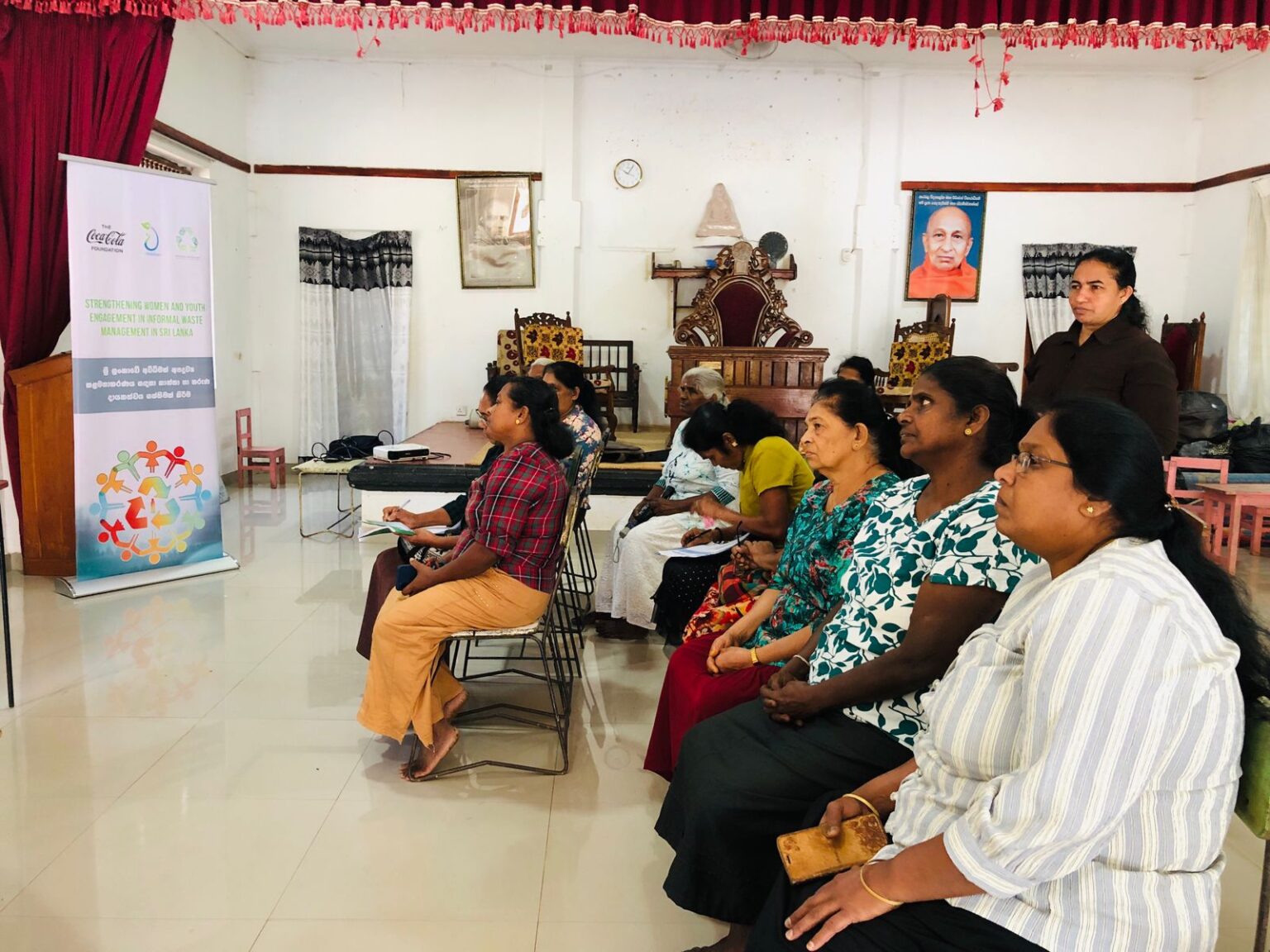
School and Community Awareness Programmes Conducted in Kandy
These school and community awareness programmes demonstrate the importance of engaging both youth and local communities in environmental initiatives. By combining educational outreach with institutional participation, the programmes contribute to building a more informed, responsible, and environmentally conscious society. On 10 February 2026, a series of awareness programmes were successfully conducted in Kandy as part of ongoing efforts to promote responsible environmental practices and strengthen community engagement. School Awareness Programme – Mahanama College, Kandy A school-based awareness session was conducted at Mahanama College, Kandy, reaching 250 students. The session focused on promoting environmentally responsible behaviour among students, encouraging sustainable waste management practices, and fostering long-term behavioural change. Students were introduced to key concepts of proper waste segregation, environmental protection, and the importance of individual responsibility in maintaining clean and healthy surroundings. The interactive nature of the programme allowed students to actively engage through discussions and questions, helping them better understand how their daily actions can contribute to environmental sustainability. Community Awareness Programme – Ketawala Temple, Kandy On the same day, a community awareness programme was conducted at Ketawala Temple, Kandy, with the participation of 26 community members. The programme brought together local residents along with representatives from the Police and the Divisional Secretariat Office, strengthening multi-stakeholder engagement at the community level. The session focused on raising awareness about responsible waste management practices, community-level environmental protection, and the importance of collective action in maintaining clean public spaces. The presence of local authorities reinforced the importance of shared responsibility and institutional collaboration in addressing environmental challenges. Strengthening Community Engagement

Canal Cleaning Programme at Magulpokuna Canal, Welisara Supports Flood Recovery and Livelihood Restoration
Under the Livelihood Development Support & Waste Management Programme, implemented by Janathakshan with funding support from the United Nations Development Programme (UNDP), a canal cleaning programme was successfully conducted on 05 February 2026 at the Magulpokuna Canal in Welisara. Responding to Post-Flood Environmental and Livelihood Challenges Recent flooding in the Welisara area led to significant environmental degradation and canal blockages, resulting in water stagnation, heightened flood risks, and public health concerns. These impacts disproportionately affected Informal Waste Collectors (IWCs), whose daily livelihoods were disrupted due to the disaster. In response, the programme initiated a targeted canal cleaning intervention aimed at restoring environmental conditions while simultaneously supporting vulnerable workers through short-term livelihood opportunities. Programme Implementation The one-day cleaning programme focused on: A total of 33 Informal Waste Collectors from flood-affected communities were engaged through a cash-for-work mechanism, enabling them to earn temporary income while actively contributing to environmental rehabilitation. Janathakshan coordinated the activity by mobilizing IWCs, facilitating community-level engagement, and working closely with the Welisara Local Authority to ensure effective implementation. The Local Authority supported the intervention by identifying critical blockage points and providing labour assistance for canal cleaning operations. Key Results and Community Benefits The intervention resulted in: Beyond the 33 direct beneficiaries, residents living along the Magulpokuna Canal, local businesses, and road users in the Welisara area benefited from improved environmental conditions and reduced flood vulnerability. Strengthening Inclusive Recovery and Resilience The Canal Cleaning Programme at Magulpokuna Canal demonstrates a people-centered and integrated approach to post-disaster recovery, linking environmental rehabilitation with livelihood support. Through strong collaboration among Janathakshan, UNDP, local authorities, and community members, the initiative contributes to cleaner surroundings, improved flood resilience, and strengthened livelihoods in flood-affected urban and peri-urban communities.

Canal Cleaning Programme in Alwis Town, Wattala Supports Flood Recovery and Livelihood Restoration
Under the Livelihood Development Support & Waste Management Programme, implemented by Janathakshan (Guarantee) Limited with funding support from the United Nations Development Programme (UNDP), a targeted canal cleaning programme was conducted on 06 February 2026 at the canal located opposite Lyceum International School, Alwis Town, Wattala. Addressing Post-Flood Environmental Challenges Recent flooding in Alwis Town led to significant environmental degradation and canal blockages, particularly along the canal opposite Lyceum School. The accumulation of flood debris and unmanaged solid waste restricted water flow, increased the risk of localized flooding, and posed public health concerns to surrounding communities. The flooding also disrupted the livelihoods of Informal Waste Collectors (IWCs) who depend on daily waste collection activities for income. In response, the programme implemented a focused intervention aimed at restoring environmental conditions while supporting vulnerable workers through temporary livelihood assistance. A total of 15 Informal Waste Collectors from flood-affected communities were engaged through a cash-for-work mechanism, enabling them to earn short-term income while contributing directly to environmental rehabilitation. Programme Implementation The one-day cleaning initiative focused on: Janathakshan coordinated the activity by mobilizing IWCs, facilitating community-level engagement, and liaising with relevant local authorities to ensure smooth and effective implementation. The intervention followed an inclusive and people-centred approach, prioritizing dignity, safety, and active participation. Key Results and Community Benefits The programme resulted in: In addition to the 15 direct beneficiaries, residents of Alwis Town, the nearby school community, and road users in the vicinity benefited from improved environmental conditions. Strengthening Resilience Through Inclusive Action The Canal Cleaning Programme at Alwis Town demonstrates a practical and integrated approach to recovery—linking environmental rehabilitation with livelihood support. Through strong collaboration among Janathakshan, UNDP, local authorities, and community members, the initiative contributes to cleaner surroundings, improved drainage systems, and enhanced resilience in flood-affected urban areas.
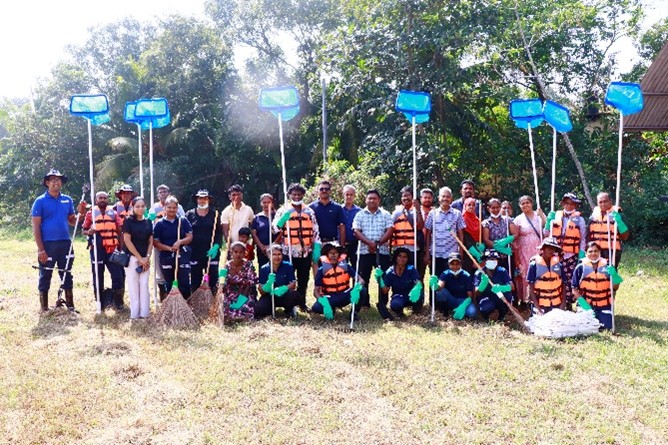
Four-Day Canal Cleaning Programme Launched in Horape, Wattala to Support Flood Recovery and Livelihood Restoration
Under the Livelihood Development Support & Waste Management Programme, funded by the United Nations Development Programme (UNDP) and implemented by Janathakshan, a four-day canal cleaning initiative was launched on 28 January 2026 at the Janaka Sooriya Bandara Ground Canal in Horape, Wattala. Addressing Post-Flood Environmental and Livelihood Challenges Following the recent floods in the Horape and Wattala areas, severe environmental degradation was observed, including blocked canals, accumulated solid waste, and stagnant water. These conditions increased flood vulnerability, posed public health risks, and disrupted the livelihoods of Informal Waste Collectors (IWCs) who depend on waste recovery for income. In response, the canal cleaning programme was initiated to simultaneously restore environmental conditions and provide temporary livelihood assistance to affected communities. Programme Implementation The programme officially commenced on 28 January 2026, engaging approximately 25 Informal Waste Collectors from flood-affected communities on the first day. Participants were supported through a cash-for-work mechanism, enabling them to earn short-term income while actively contributing to environmental rehabilitation efforts. Cleaning activities focused on: These efforts directly contributed to reducing water stagnation, minimizing future flood risks, and improving sanitation conditions in the surrounding communities. Strong Institutional Collaboration Janathakshan played a central role in planning, coordinating, and implementing the programme. Key responsibilities included mobilizing Informal Waste Collectors, facilitating community engagement, coordinating with local authorities, and ensuring safe and dignified working conditions for all participants. Drawing on its experience in inclusive waste management and livelihood recovery, Janathakshan ensured that the intervention addressed both environmental and socio-economic recovery needs. The Wattala Pradeshiya Sabha (PS) provided strong institutional support to ensure the success of the initiative. The Chairman, Secretary, and municipal staff actively contributed by: This collaborative approach enabled efficient implementation, proper waste handling, and alignment with local environmental management priorities. Strengthening Resilience Through Inclusive Recovery The programme is expected to result in improved canal functionality and drainage capacity, reduced flood risk, enhanced public health conditions, and short-term income generation for vulnerable Informal Waste Collectors. By linking environmental restoration with livelihood support, the initiative demonstrates a people-centred and integrated approach to post-disaster recovery, contributing to strengthened resilience in flood-affected urban and peri-urban communities. The canal cleaning activities will continue over the next two days, further enhancing environmental conditions and supporting livelihood stability in the Horape and Wattala areas.
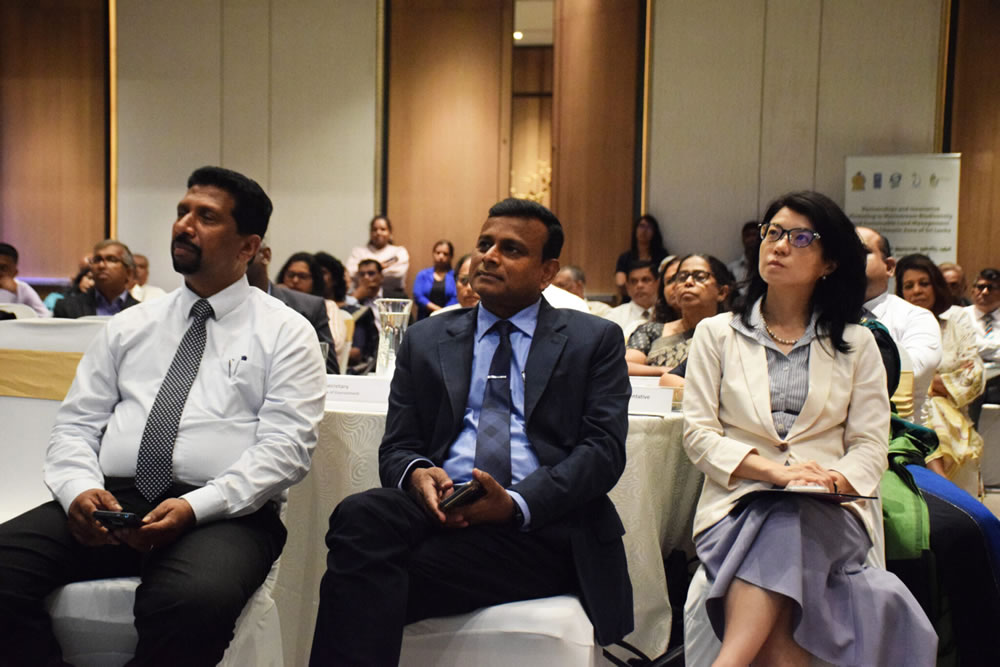
Plantation Sector Forum Held in Colombo under the GEF-7 Project
A Plantation Sector Forum under the “Partnerships and InnovativeFinancing to Mainstream Biodiversity and Sustainable LandManagement in Sri Lanka’s Wet Zone (GEF-7 Project)” wassuccessfully held on 04 March 2026 in Colombo, bringing together keystakeholders from across the plantation sector. The forum convened around 100 participants, includingrepresentatives from government agencies related to the plantationsector, plantation companies, development agencies, and academicexperts. The event provided an important platform for dialogue,collaboration, and knowledge sharing among stakeholders workingtowards strengthening sustainability within Sri Lanka’s plantationlandscape. During the forum, participants were introduced to the objectives andstrategic focus of the GEF-7 project, highlighting its importance for theplantation sector in promoting sustainable land management (SLM)and biodiversity conservation. Discussions explored how theseapproaches can be integrated into plantation management practicesto enhance long-term environmental sustainability while supportingsectoral productivity and resilience. A key focus of the project is the promotion of Public-Private-PeoplePartnerships (PPPP) to strengthen collaboration between governmentinstitutions, private plantation companies, local communities, anddevelopment partners. The forum also highlighted the project’semphasis on innovative financing mechanisms, including theexploration of new financial approaches that support biodiversityconservation and sustainable land management within plantationlandscapes. Representatives from government agencies and plantation sectorcompanies actively shared their experiences, ideas, and suggestionsduring the discussions. Participants also reflected on existingchallenges in integrating sustainable practices within plantationsystems and explored potential pathways and collaborative actions toaddress them. The forum concluded with a shared understanding of the importanceof collective action and partnerships in advancing sustainableplantation management, ensuring both environmental conservationand long-term economic sustainability for the sector.
